IRON CHEF’ COMING TO BOSTON

March 13, 2009 – The Wave (by IntraFish Media)

Masaharu Morimoto, better known as the “Iron Chef,” will be making an appearance this year at the International Boston Seafood Show.

Morimoto will be the keynote speaker at this year’s show, and also will be at the True World Foods booth on March 16th for a book signing. New Jersey-based True World Foods is sponsoring Morimoto’s appearance at the show.

“True World Foods customers, such as Chef Morimoto, know they can rely on an unwavering dedication to quality, a constant commitment to its customers and a strong work ethic – all centered on offering a wide range of products with a uniquely Asian focus,” the company said.

From its beginnings in the mid-1970s, when the company – then a modest enterprise known as New York Fish House – sold fish to passersby on the streets of Brooklyn, N.Y., True World Foods has steadily grown to an organization consisting of more than two dozen independent locations across North America.

True World Foods recently expanded its operations into Europe, with the opening of its newest locations in London and Madrid.


TRUE WORLD FOODS RECEIVES USDC ‘GRADE A’ CERTIFICATION

September 12, 2008 – Seafood Source News (by Seafood Business)

Seafood wholesaler and distributor True World Foods of Rockleigh, N.J., yesterday announced that 16 of its independent locations have achieved U.S. Grade A certification from the U.S. Department of Commerce for its fresh and frozen tuna and salmon products. The rest of the company’s U.S. locations are working to achieve this status.

We feel strongly that earning the U.S. Grade A mark is very important, since it signifies that our products meet the highest quality established by applicable U.S. Grade standards as determined by the USDC, ” says Debbie Pike, True World spokesperson. “We are very proud that we can designate our tuna and salmon products as U.S. Grade A and that our customers can feel confident knowing that they are receiving products that are processed using the strictest standards of cleanliness, safety and quality control.”

True World Foods has more than two dozen sales and distribution centers in North America, distributing tuna and a full line of seafood products, to more than 8,000 restaurants, hotels and other foodservice customers.


TRUE WORLD AWARDED GRADE A

September 11, 2008 – The Wave (by IntraFish Media)

True World Foods LLC says it’s achieved U.S. Department of Commerce “Grade A” certification for its fresh and frozen tuna and salmon products.

New Jersey-based True World Foods is a wholesaler and distributor of tuna and a full line of other seafood products to more than 8,000 restaurants, hotels and other foodservice customers across North America.

Unlike FDA’s Hazard Analysis and Critical Control Point (HACCP) Program, which is a mandatory inspection required by law, the Grade A inspection program is voluntary and requires a much more rigorous level of compliance and commitment.

Once a satisfactory inspection has been conducted, the inspected entity earns the right to use official marks on their products, such as the Grade A certification.


TUNA – A HEALTHY CHOICE ON MENUS

June, 2008 – Today’s Restaurant News

By – Debbie Pike, corporate spokesperson for True World Foods LLC

Did you know that tuna is second only to shrimp as the most popular seafood in the United States? Whether it’s baked, broiled, canned or eaten raw in sushi or sashimi, Americans love tuna! But as tasty as tuna is, many people don’t realize that it also contains many health benefits.

If you’ve ever wondered what makes tuna such a healthy part of a balanced diet, consider the following:

Tuna is an excellent source of high-quality, lean protein.

Unlike many other high protein foods, tuna is high in lean protein while also being naturally low in fat and cholesterol. In fact, tuna is lower in fat than beef, poultry or pork, and can actually aid the body in eliminating bad fats consumed in other foods. And, since it contains lots of essential amino acids, the protein found in tuna is of a very high quality.

Tuna is high in vitamins and minerals.

Tuna is a nutrient-dense food. It is a great source of many important vitamins and minerals, including vitamins B1, B6 and niacin and the minerals selenium, magnesium and potassium.

In fact, the trace mineral selenium is a component of glutathione peroxidase, an important antioxidant that is vital to a healthy liver. Proper liver function is critical to overall health, since the liver is responsible for ridding the body of potentially toxic substances that are in virtually ever aspect of our environment, including our food, water and air.

Tuna is rich in healthy omega-3 fatty acids.

One of tuna’s greatest health attributes is that it is a rich source of healthy omega-3 fatty acids.

Heart-healthy omega-3s play an important role in many facets of health and have been found to treat or prevent a multitude of conditions. Current studies show the strongest link to be in the area of heart-related diseases. Clinical studies suggest that omega-3s can lower blood pressure as well as reduce LDL (“bad” cholesterol) and raise HDL (“good” cholesterol). Evidence also suggests that consuming omega-3 fatty acids from fish sources can help guard against stroke from the build-up of plaque and blood clots in the arteries leading to the brain.

In addition to heart disease, healthy omega-3s are linked to improving many other conditions. Some of their current treatment and prevention uses are:

  • Cancer (including leukemia, multiple myeloma, non-Hodgkins lymphoma, kidney and colon cancer)
  • Diabetes
  • Weight Loss
  • Rheumatoid Arthritis
  • Osteoporosis
  • Depressio
  • Macular Degeneration
  • Dry Eyes
  • Inflammation
  • Childhood Asthma
  • Sunburn
  • Alzheimer’s Disease
  • Autism
  • Brain Memory and Performance

In addition, research indicates that omega-3 fatty acids, such as those found in tuna and other cold water fish, actually reduces the risk of becoming obese. This is in direct contrast to foods that contain saturated fats, which appear to promote weight gain.

Fresh tuna is available throughout the year, making it easy to incorporate as part of a low-fat, nutrient-dense well-balanced diet.


CORPORATE SPOTLIGHT – TRUE WORLD FOODS

March 24, 2006

This company rode the wave of success from passersby on the streets to the most distinguished seafood/sushi restaurants in its region.

True World Foods started out as New York Fish House in 1975, when the business was based on the success of selling seafood to passersby on the streets of Brooklyn, NY. As business blossomed, the company expanded to other cities in the US, and by 1995, it had more than 20 independent locations.

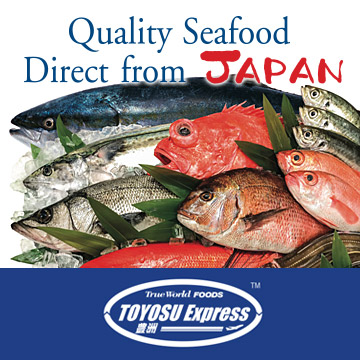
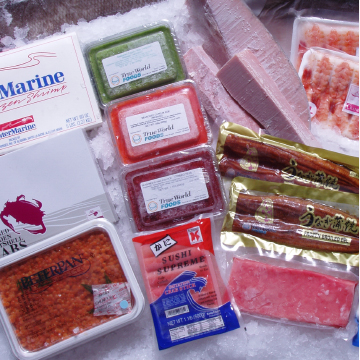
Since that time, its name has changed to True World Foods, Inc., allowing the company to unify its buying power, set greater standards of quality from its sources, and offer what it believes to be the best value of seafood to its customers. True World offers one of the largest inventories in the seafood business and the highest standard of quality product delivered fresh on a daily basis.

Moving down the chain

Headquartered in Elizabeth, NJ, True World delivers sushi-quality seafood to several thousand restaurants in the US each day in states including New York, New Jersey, Connecticut, Pennsylvania, and Delaware.

Joshua T. Yashiro is True World’s CEO; underneath him is a general manager in charge of the Elizabeth facility. Following the general manager are the sales managers of the Japanese and American divisions. The chain continues with a purchasing manager, a dispatch manager, and production manager.

Under the managerial level, True World has a production team and delivery leaders, including a night-order supervisor. In addition to their main roles, these individuals, who are senior, experienced production employees, train and assist employees in their departments and facilitate communication between departments.

You won’t find most of True World’s seafood products crawling on the ocean floor. One of the company’s businesses, Shining Ocean, sells imitation crab and lobster products, also known as surimi. Its brand names include Kanimi, Emerald Sea, Seafarer, Crab Elite, Crab Smart, and Pacific Choice (its Kanimi Deluxe product has real crab and lobster meat added). Shining Ocean was formed in 1986 and distributes its products throughout the Americas and Europe.

In motion

From its Elizabeth facility, True World Foods operates a fleet of refrigerated box and pickup trucks, vans, and cars. It generally assigns a regular vehicle to each driver, airport/market pickup worker, buyer, and sales representative. Drivers and buyers are assigned a box-truck or van. The two buyers of live fish drive a flatbed truck specifically outfitted with fish tanks. The airport/market pickup workers are assigned larger trucks that require a commercial driver’s license. Sales representatives drive pickup trucks or small cars with the back seat removed for the transportation of products.

The company maintains written policies and procedures by department. Drivers are issued a detailed list of procedures for checking, loading, and delivering products to customers. Production employees are required to follow standard sanitary operating, safe work, and forklift operating procedures.

In addition, there are a number of frequent meetings between departments. Sales representatives attend daily morning meetings with buyers and often hold weekly meetings with drivers. Sales managers hold monthly meetings with delivery team leaders and production employees. Drivers and individual groups of product employees, such as freezer workers, meet alone to address specific issues.

Supplementary efforts

True World Foods employs skilled workers in the positions of tuna cutter, seafood fillet worker, seafood selector, and tuna grader, who are responsible for rating, selecting, and cutting the fish. Tuna cutters and fillet workers cut tuna into loins and various fish into fillets; the selector and tuna grader are responsible for discerning and grading the quality of fish based on such factors as color and fat content.

Sales representatives, buyers, and fish cutters are also educated about the process and discuss the quality, availability, selection, and processing of fish for restaurants with the selectors and graders. Fillet workers and tuna cutters report to the production manager, while the tuna cutter reports to the purchasing manager.

Drivers and sales representatives supplement the production process, talking to production employees to locate any missing items, assembling certain products, and icing and packing them for loading and delivery. Sales representatives also help select, distribute, weigh, and count products verifying that the processed products meet customer requirements.


FISH TALE – THE BIG ONES THAT DIDN’T GET AWAY ARE YOURS FOR THE TAKING

February 19, 2003 – The Star-Ledger (Newark, New Jersey) By – Brooke Tarabour

It’s 5:30 a.m., and a dozen men crowd the center of a huge room, raising their voices to be heard above their competition. They point, they gesture, each holding printed order forms and pens in outstretched arms, ready for victory as their claim their prizes.

The floor of the New York Stock Exchange? You might think so, but Wall Street traders are just turning over in bed when the salesmen of True World Foods in Elizabeth Port begin fighting for their clients over who gets what. And the prize isn’t exactly a piece of the national corporate pie — it’s a loin of tuna, a side of salmon or a slab of swordfish.

If you’ve ever wondered where the seafood on your favorite sushi bar comes from, and how you too can buy prized sashimi-grade fish, you’ll have to get up pretty early in the morning to find out.

It’s a wild scene.

By 6:30 a.m., about 50 uniformed staff members are moving at top speed, grasping clipboards and pushing rolling racks filled with more than 100 varieties of seafood to more than 35 waiting refrigerated vans.

More than 20,000 pounds of lobster have their own room in the 50,000-square-foot facility; there are shellfish rooms, freezing rooms and two huge cutting rooms — each dedicated to a specific product.

You need a golf cart to navigate the freezer.

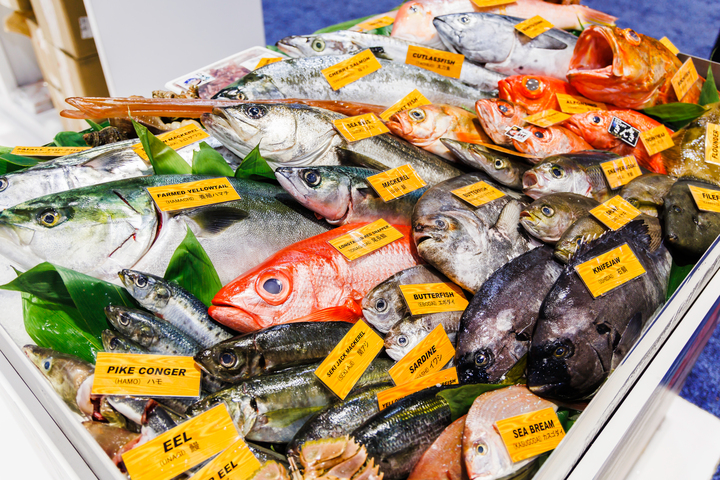
There is even a senkai room and a senkai truck, where seafood is taken from a tank in a room to a tank on a van, for restaurants who want their fish still flipping. And to that that, Asians like their fish whole and Americans want it filleted, so Asian and American products are separate. In the end, it’s not unusual that to fill one order, a staffer will visit a dozen separate areas before steering his rack to a van.

As the day winds down at 7 a.m., the drivers take over, delivering fresh seafood to more than 1,300 restaurants daily in the tri-state area.

True World Foods sells fish. Lots of fish.

Last year, the company sold about 250,000 pounds of tuna alone from this one plant — their biggest seller. And that’s only one of about 100 kinds of seafood sold from 21 offices across the country. One of the largest wholesalers in the US, gross sales nationwide was $280 million last year; of that, $50 million was from the Elizabeth Port plant.

Seventy-five percent of True World’s local customers are Japanese and other Asian restaurants; 25 percent are American. There are more than 700 employees. And from midnight on, they are on the move: buying, selling, negotiating, processing and packing.

If you think the runners have a long day, try being a truck driver. They’re at Fulton Fish Market before 2 a.m., then back unloading at the plant. They repeat the process all day at all three area airports, as fish is flown in from fleets around the world.

If you own a restaurant, all you have to do is call to place an order. For the rest of us, there’s Aikyo, True World’s fastest growing division. Aikyo, or home delivery service, is sort of like the milkman, but instead of butter and eggs, you can choose sashimi-grade tuna, salmon, mahi mahi or swordfish steaks — not to mention lobster, shrimp, oysters from both coasts — delivered fresh to your door by overnight mail. Gus Mavraganis, internet manager, says the company started the service after many requests. “Right now, it’s mostly an Asian customer base,” he says, “But there’s a lot of interest lately from the American community who likes to shop online.”

True World’s website (www.trueworldfoods.com) lists more than 400 fresh and frozen products in their wholesale store and 30 in the retail store. You can buy everything from fish steaks to sides of fish, but before you shop, you might want to link to “seafood facts.” The site offers an extensive manual filled with lots of good advice on how to purchase top-grade seafood. There’s also an in-depth nutrition guide to 18 most common species, an A to Z sushi guide and an oyster guide for all 90 varieties. The website is a valuable resource, whether you’re buying online or at your local market.

Most of True World’s Asian customers could probably write the book on how to buy fish, when it comes to what they demand for their menus. And more often than not, they rely on their salesmen to meet their needs. But once in a while, they want to take a look for themselves.

On a recent morning long before dawn, Michael Lee, owner/chef of Kyoto in Marlboro, drove to True world Foods to choose a loin of tuna for his sushi bar and for a private sushi party he was catering that evening.

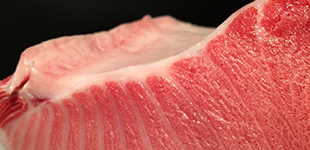
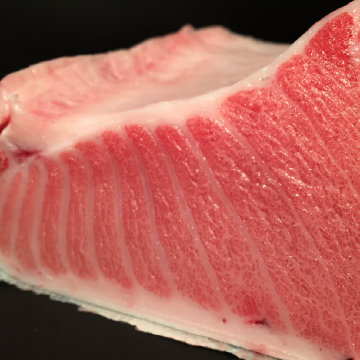
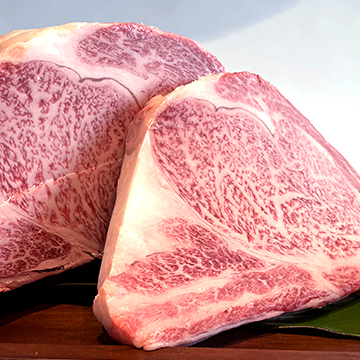
Usually, Lee relies on his salesman, Toshio Yokohagi, to bicker with the rest of the guys: “I look for three fingers of fat,” he says, spreading his fingers across the bottom of a 100-pound, triangle-shaped loin of bluefin tuna on a rack in one of True World’s cutting rooms. The piece Lee has chosen is white, as wide as his fingers and blood-red on top. “Fatty tuna — it’s called toro — makes good sushi,” he says. “If the fat is only one finger wide, there’s not enough oil. The more oil, the better the taste.”

Yokohagi accompanies Lee, but says little; in the tuna cutting rooms at True World Foods, the cutters are king. Just ask them: “I’m the high priest o the tuna temple,” says Stephen Sprague, who’s been here for 16 years.

Sprague has a great attitude for someone who starts cutting fish at 1 a.m. He and nine other cutters work for eight hours a day in just-above-freezing rooms, surrounded by huge, 400- to 700-pound headless fish awaiting their fate in places like Moscow.

Moscow? It seems the Russian capital is a burgeoning bastion of sushi restaurants — six at last count, says Mavraganis, who is a former chef, adding that True World ships seafood there daily to keep the city’s sushi bars stocked.

Sushi is big business for True World Foods all over the globe, but there’s always room for growth. The company is betting it can attract new sushi consumers by offering the cuisine in a more familiar venue; their Big Apple sushi counters are now at more than 20 supermarkets in New Jersey, New York and Virginia. Each counter is manned by professional sushi chefs, offering an extensive line of just-made cooked and raw varieties; prices are generally lower than at restaurants.

While Japanese chefs are familiar with sashimi-grade seafood because their cuisine has always incorporated its use, many American chefs now embrace tuna tartare and other Asian-influenced raw or transparently cooked fish in their dishes. One New Jersey chef who was a pioneer of this contemporary take on seafood in Ken Marcotte, whose award-winning Westfield-based restaurant bearing his name had a 14-years run.

Two years ago, Marcotte came to True World Foods as a salesman, selling fish to other American chefs looking for high-quality seafood. “I wanted to get out of the kitchen, but still stay involved with chefs,” he says. Part of True World’s American division, Marcotte and a team of other ex-chefs — who buy and sell millions of pounds of product — work with more than 400 restaurants in the tri-state area.

Marcotte enjoys the action. He also likes the freedom to offer so many products, fulfilling menu drams for cutting-edge chefs. The extensive list of possibilities is fairly new. Back in 1979, two Japanese men who lived in Brooklyn saw that small Asian restaurants needed deliveries of fresh fish, but didn’t have the staff or time to go to the granddaddy of wholesale fishmongers, the Fulton Fish Market in lower Manhattan. They bought two vans and set up shop on the road, bringing product fresh from the market to the kitchen doors of Chinatown and other New York neighborhoods.

True World’s president, Takeshi Yashiro, says as demand escalated, the fleet grew, a warehouse opened, then another and soon, business expanded to the West Coast. To give you an idea of how big True World Foods is, even with more than 45 boats, the two New Jersey-based seafood co-ops in Belford and Point Pleasant Beach aren’t large enough to be sources for True World Foods. Mavraganis says they just can’t meet the company’s daily needs for so much product.

If you want to buy sashimi-grade fish retail for tonight’s dinner, you might have to search a bit. You can find it in some supermarkets, but not many. You may have better luck at larger Asian markets, like Mitsuwa in Edgewater. There, you can choose from about 20 varieties packaged and ready for make-your-own sashimi and sushi. It’s expensive, but not nearly as pricey as ordering your favorites at a sushi bar. In fact, it’s not surprising sushi is so costly. At True World Foods, restaurateurs pay $18 to $25 per pound for toro, for instance — and that’s wholesale.

If you think True World Foods caters to only a small percentage of the population, while the rest of us are content with shopping for fish in our neighborhood market, you’re right. And in doing so, they’ve taken fields of expertise to a higher level. Not only do the buyers specialize in one product — there are oyster buyers, lobster buyers, tuna buyers — but Korean salesmen serve Korean restaurants, Japanese staff work with Japanese chefs, and so on.

On the morning Mike Lee was fighting for his toro, the salesroom at True World Foods sounded like a busy day at the United Nations. In the communal kitchen, Koreans cooked kimchee, Japanese staff ate seaweed salad and Americans munched on what else, tuna sandwiches.

It’s just another day at True World Foods. By noon, everyone would be home sleeping, Lee would return to Kyoto triumphant — his fatty loin of tuna cold-packed at his side.

His guests that night probably loved the tuna sashimi, and Lee didn’t have the heart to tell them it could have turned out much differently; it could have been a party of Muscovites praising the three fingers of fat. Sometimes it pays to get up really early in the morning